How to Get a Better-Looking Jawline Without Unsafe Hacks
A jawline can look more or less defined because of anatomy, facial soft tissue, body-fat distribution, posture, facial hair, camera position and lighting. Low-risk presentation changes can improve how the jaw appears in a photograph. Chewing devices, forceful clenching and tongue-posture routines do not have established evidence for safely sculpting adult jaw bones.
Start with the goal: better photos, ordinary grooming, general health or treatment of pain and bite problems. A face-rating score cannot tell you which medical or cosmetic treatment you need.
Published 2026-08-06 · Last reviewed 2026-08-06
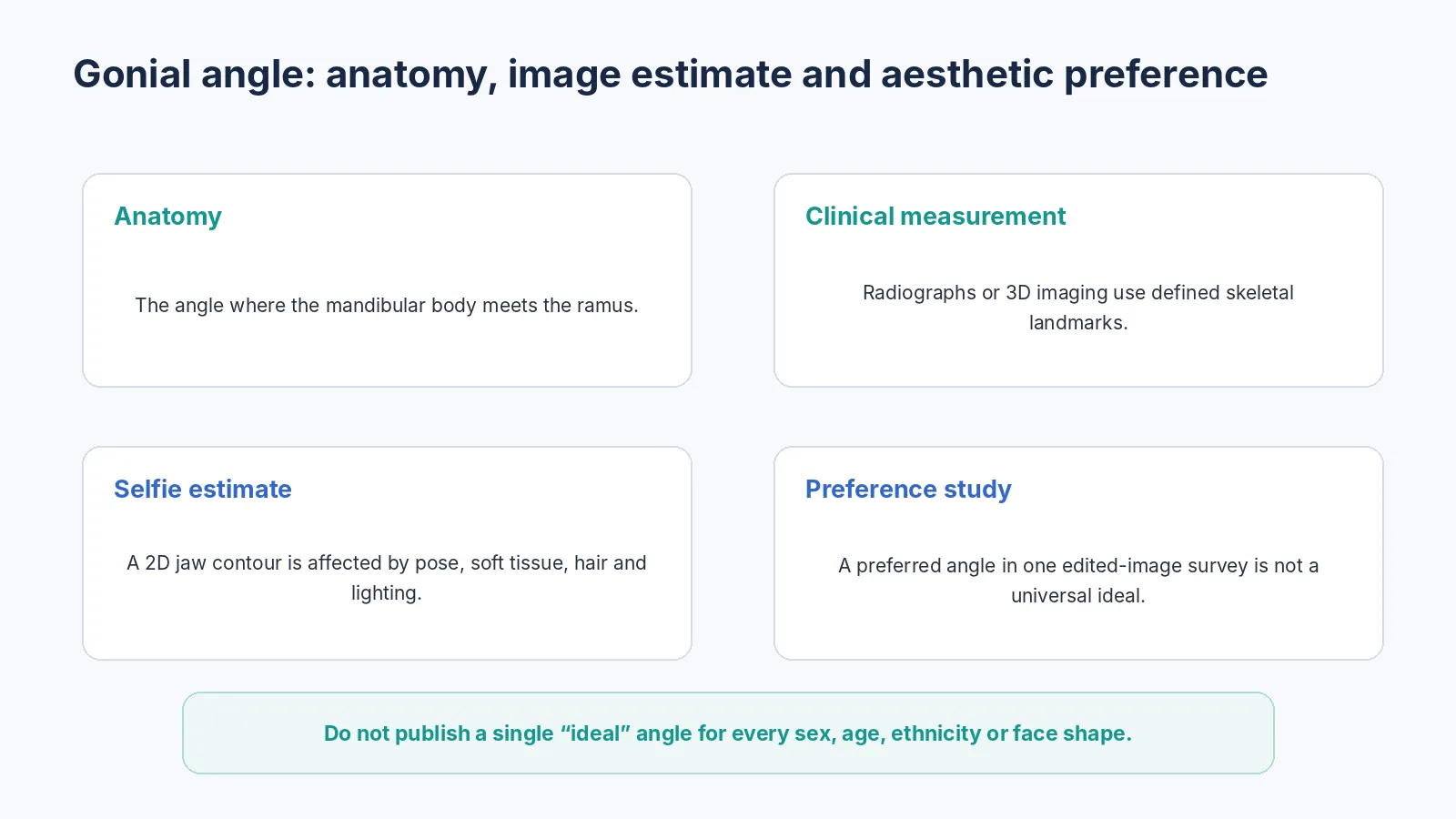
What creates the visible jawline?
- The size and shape of the mandible and chin.
- The masseter and other muscles around the jaw.
- Fat and other soft tissue under the skin.
- Skin elasticity and age-related changes.
- Neck posture and head position.
- Facial hair, hairstyle and clothing lines.
- Light direction, lens and camera distance.
Because the visible jawline has multiple components, one “jaw angle” or one exercise cannot explain every appearance difference.
Improve jawline presentation in photographs
Use camera distance instead of an extreme close-up
A phone held very close can distort the center and lower face. Moving the camera farther away and using a moderate focal length generally creates a more natural perspective.
Keep the camera near eye level
A low camera emphasizes the underside of the jaw and neck. A very high camera changes the apparent chin and facial proportions. Eye-level framing is a useful neutral baseline.
Use soft side-front lighting
Light slightly to the side of the camera can reveal contour without creating a harsh black shadow. Lighting changes the photograph, not the bone.
Relax instead of clenching
Forceful clenching may create temporary muscle tension but can also make an image look strained. It is not a safe long-term jawline strategy.
Low-risk everyday presentation
A maintained beard line may visually frame the lower face for people who grow facial hair. Haircuts and collars can also change perceived proportions. These are optional style choices and should not be presented as rules for masculinity, femininity or attractiveness.
Routine dental care, sleep, ordinary physical activity and skin protection support overall health. They should be recommended for health rather than as guaranteed ways to reach a score.
Do jaw exercises work?
Jaw movement is necessary for normal function, but claims that repetitive exercises create a universally better jawline are unsupported. High-resistance chewing, prolonged clenching and jaw trainers may overload muscles or joints. NIDCR advises people with jaw-joint or muscle symptoms to reduce habits such as clenching and gum chewing.
Do not recommend hundreds of daily jaw repetitions, very hard gum, bite devices or “training through pain.” Pain is not proof that the jawline is improving.
Does mewing sharpen the jaw?
Normal comfortable tongue posture is part of oral function, but professional orthodontic organizations state that scientific evidence does not support the claim that self-directed mewing reshapes the adult jaw or straightens teeth. Forceful pressure can also distract from real bite, airway or speech concerns that need evaluation.
Can body-fat loss change the face?
Overall weight change can change facial soft tissue for some people, but fat cannot be selectively burned from the jawline. Genetics, age and individual fat distribution affect where changes appear. The safest weight goal depends on overall health and should not be prescribed from a selfie.
Rapid weight loss can also create unwanted facial volume loss or loose skin. A lower number on a scale is not automatically a better-looking face.
When the issue is puffiness or swelling
Temporary puffiness can vary with sleep, alcohol, dietary patterns, allergies and illness. Sudden, one-sided, painful, persistent or unexplained swelling requires healthcare assessment. Do not assume every full-looking lower face is body fat.
When to see a professional
| Concern | Appropriate professional starting point |
|---|---|
| Tooth alignment or bite | Dentist or orthodontist |
| Jaw pain, locking or painful clicking | Dentist, physician or clinician experienced with TMD |
| Breathing or swallowing concern | Physician, ENT or relevant specialist |
| New swelling or lump | Healthcare professional |
| Cosmetic procedure questions | Properly licensed clinician who can assess risks and alternatives |
| Compulsive appearance checking | Mental-health professional |
What an AI score can and cannot track
A tool may respond to visible jaw landmarks in one photograph. It cannot distinguish bone, muscle, fat, swelling and camera distortion with clinical certainty. Therefore it should not tell the user that a low jaw score identifies a weak mandible or recommends treatment.
A safer improvement plan
- Establish a neutral photo protocol.
- Use low-risk grooming and styling choices you actually enjoy.
- Address pain, bite, breathing, skin or swelling with qualified care.
- Avoid excessive chewing, forceful clenching and self-injury.
- Limit face-score checking and judge success by wellbeing and real-life confidence, not one number.
Frequently asked questions
Can chewing gum sharpen my jawline?
Does mewing change the adult jaw?
Can I lose fat only under my chin?
Why does my jaw look different in every selfie?
Are jaw trainers safe?
What symptoms need assessment?
References
- [1] TMD — National Institute of Dental and Craniofacial Research — Symptoms and conservative advice, including reducing clenching and gum chewing.
- [2] Does Mewing Actually Reshape Your Jaw? — AAO — Orthodontic evidence boundary for jaw-reshaping claims.
- [3] British Orthodontic Society statement — No evidence that chewing or facial movements change face shape.
- [4] The ideal male jaw angle — An Internet survey — Use only to explain limited preference-study context, not as a target.
- [5] Omogle Methodology — Defines any current jaw-related calculation.