How to Lose Face Fat: What Is Possible, What Is Not, and When It Is Puffiness
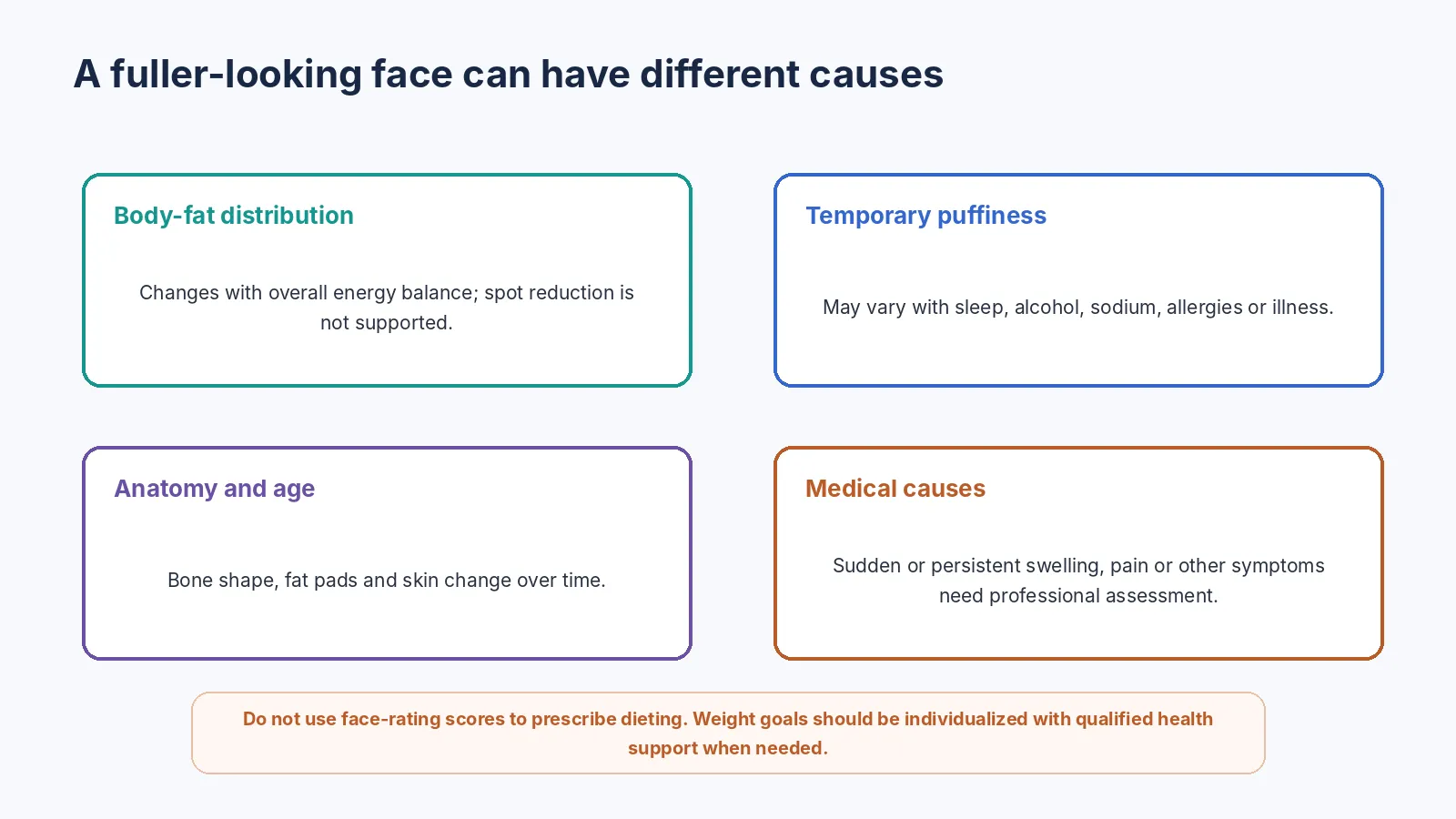
You cannot reliably choose to lose fat only from the face. Facial volume may change when overall body fat changes, but genetics, age, anatomy and individual fat distribution influence where change appears. A fuller-looking face can also be temporary puffiness or swelling rather than fat.
Do not start a restrictive diet because of a selfie or AI score. Health, nutrition and weight goals should be individualized, and sudden or one-sided swelling needs medical assessment.
Published 2026-08-06 · Last reviewed 2026-08-06
Why spot reduction does not work
Exercises use muscles, but they do not instruct the body to remove fat from the exact area being moved. Facial exercises may change expression or muscle fatigue; they are not a proven method for selectively burning cheek or under-chin fat.
Overall fat loss occurs through whole-body energy balance and varies by person. Some people notice facial change early; others notice it later. That pattern is not under precise voluntary control.
Fat, puffiness and anatomy are different
| Possible factor | Typical clue |
|---|---|
| Body-fat distribution | Changes gradually with overall weight and varies by genetics. |
| Temporary puffiness | May fluctuate with sleep, alcohol, dietary patterns, allergies, illness or menstrual/hormonal factors. |
| Normal anatomy | Cheek fat pads, bone shape and facial proportions differ between people. |
| Age-related change | Facial volume and skin support change over time. |
| Medication or health condition | May cause persistent, generalized, sudden or unusual swelling and needs assessment. |
If overall weight loss is appropriate
Use general evidence-based health guidance rather than a “face fat” crash plan. Sustainable dietary patterns, regular physical activity, adequate sleep and professional support when needed are safer than aggressive restriction. The appropriate target depends on health history, medications, age and many other factors.
Rapid weight loss can reduce facial volume quickly and may create a gaunt or older appearance for some people. Cleveland Clinic notes that rapid weight loss can lead to sunken cheeks, wrinkles and loose skin because facial fat and skin support change.
What may reduce temporary puffiness
The useful action depends on the cause. Ordinary fluctuations may improve after sleep, recovery from alcohol, treatment of allergies or returning to a normal routine. This article should not promise that one food, tea, massage or amount of water “flushes” facial fat.
- Compare photos at the same time of day and under the same conditions.
- Avoid judging a single morning-after image.
- Follow medical advice for allergies or medications.
- Do not use diuretics, laxatives or dehydration to change facial appearance.
- Seek care when swelling is persistent, painful, sudden or accompanied by other symptoms.
Do face exercises slim the face?
There is not strong evidence that facial exercises selectively remove fat. Repetitive jaw movement may enlarge or fatigue chewing muscles rather than make the lower face smaller. Excessive gum chewing or clenching may also aggravate jaw symptoms.
Can massage remove face fat?
Massage may temporarily change how fluid or soft tissue feels, but it does not destroy or selectively metabolize facial fat. Any short-term visual change should not be marketed as fat loss.
How photographs exaggerate fullness
A close camera, low angle, short focal length, neck position and harsh lighting can change the apparent lower face. Use a farther camera, eye-level position and consistent posture before concluding that the face changed.
When swelling may need care
Seek urgent care for facial swelling with breathing difficulty, throat tightness or signs of a severe allergic reaction. New one-sided weakness or drooping is also urgent.
Arrange clinical assessment for persistent or unexplained swelling, pain, fever, dental symptoms, a lump, medication-related change or rapid weight change. A face-rating tool cannot identify the cause.
How Omogle should treat body composition
Omogle should not infer body-fat percentage, diagnose swelling or tell a user to lose weight. A jawline or harmony score may respond to a photograph but cannot separate bone, fat, fluid, muscle and lens distortion.
A safer decision framework
- Check whether the difference is photographic or temporary.
- Ask whether there are symptoms or a sudden change.
- Focus on overall health rather than one face area.
- Use qualified nutrition or medical support when weight change is appropriate.
- Avoid repeated face-score checking as a dieting trigger.
Frequently asked questions
Can you lose fat only from your face?
Do face exercises burn cheek fat?
Why is my face puffy in the morning?
Will overall weight loss change my face?
Can drinking water remove face fat?
When should facial swelling be checked?
References
- [1] Walking: Is it enough for weight loss? — Mayo Clinic — General evidence-based physical-activity context; not a personalized plan.
- [2] Ozempic Face: What It Is and How To Avoid It — Cleveland Clinic — Explains facial volume loss associated with rapid overall weight loss.
- [3] TMD — NIDCR — Supports caution against excessive gum chewing and clenching when jaw symptoms exist.
- [4] Body dysmorphic disorder — NHS — Use for appearance-preoccupation and compulsive-checking boundaries.