Is Looksmaxxing Dangerous? Risks, Warning Signs, and Safer Choices
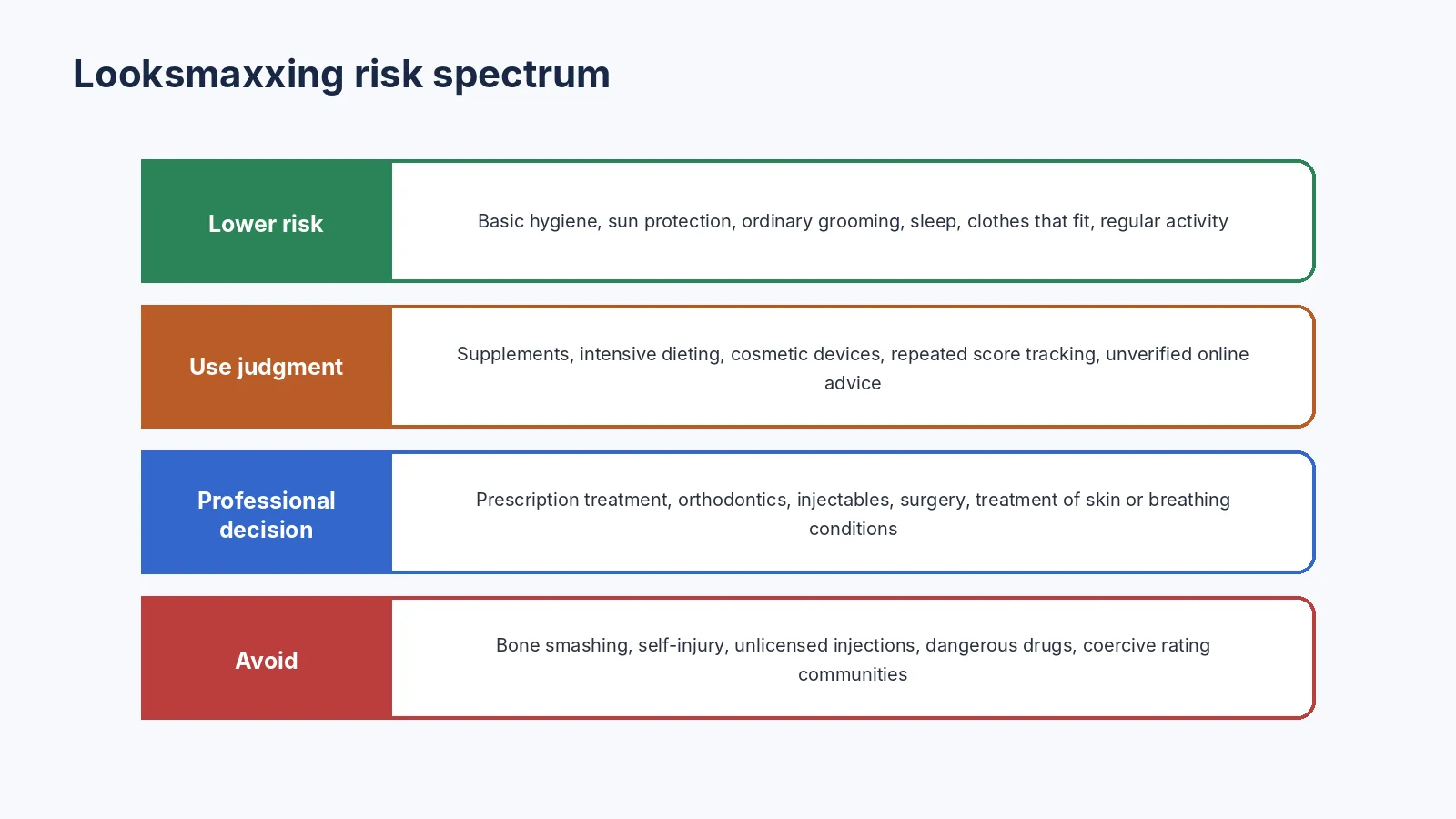
Looksmaxxing is not automatically dangerous when it means basic grooming, ordinary health care or learning personal style. It becomes dangerous when it promotes self-injury, unregulated substances, extreme dieting, unlicensed procedures, untreated pain, compulsive body checking or the belief that appearance determines whether someone deserves respect.
The key test is not the label. Ask: Is the practice evidence-based? Is it proportionate? Is a qualified professional involved when needed? Does it improve daily life without causing pain, obsession, secrecy or harm?
Published 2026-08-06 · Last reviewed 2026-08-06
Why teens and young adults may be vulnerable
Appearance and belonging are especially sensitive during adolescence. Algorithms can repeatedly show narrow beauty ideals and transform curiosity into a constant feed of flaws, measurements and products. Cleveland Clinic warns that looksmaxxing culture may contribute to self-esteem problems, anxiety, depression, BDD, eating disorders, substance misuse and self-harm in vulnerable teens.
Mental-health risks
Compulsive comparison and body checking
Repeatedly checking mirrors, photos, face scores and measurements can provide short reassurance and then create more doubt. The person may take dozens of images, avoid unflattering situations or spend hours analyzing one feature.
Body dysmorphic disorder
BDD involves intense preoccupation with perceived appearance flaws that may be minor or not noticeable to others. NHS guidance notes frequent comparison, mirror checking or avoidance, concealment and significant effects on work, social life and relationships.
Anxiety, depression and isolation
A rigid hierarchy can make ordinary variation feel like failure. Users may avoid dating, school, work, cameras or friendships because an online label tells them they are below a threshold.
Physical risks
| Practice | Possible risk |
|---|---|
| Excessive jaw training or clenching | Pain, muscle fatigue, bite symptoms or temporomandibular problems. |
| Forceful mewing | Abnormal pressure, bite concerns, speech difficulty and delayed professional care. |
| Bone smashing or self-injury | Fracture, nerve damage, bleeding, infection, deformity and emergency injury. |
| Crash dieting, laxatives or diuretics | Dehydration, nutrient problems, eating disorders and medical complications. |
| Unsupervised hormones or drugs | Serious cardiovascular, psychiatric, endocrine and other adverse effects. |
| Unlicensed injections or devices | Infection, vascular injury, tissue damage and permanent complications. |
Financial and privacy risks
Fear-based communities may sell supplements, coaching, devices or procedures without credible evidence. Live face-rating platforms and unknown apps may also collect camera, account or biometric information. Similar names do not guarantee the same operator or privacy policy.
Warning signs that self-improvement is becoming harmful
- Appearance thoughts take hours each day.
- You skip school, work or social activities because of how you look.
- You repeatedly seek reassurance but never feel settled.
- You hide spending, substances, procedures or injuries.
- You continue an exercise despite pain or bite changes.
- You compare scores daily or become distressed by small changes.
- You feel worthless, hopeless or think about self-harm.
What to do when you notice warning signs
- Stop the scoring, measurement or community feed temporarily.
- Tell a trusted person what has been happening.
- Remove access to dangerous tools, substances or instructions.
- Arrange appropriate medical, dental or mental-health support.
- Use urgent or emergency services for immediate danger or self-harm risk.
Safer alternatives
Choose routines that are reversible, comfortable and useful beyond appearance: hygiene, sun protection, routine healthcare, clothing, sleep, exercise for health, creative style and activities that build competence and relationships.
When treatment is being considered, seek a licensed professional who can explain diagnosis, alternatives, costs, limitations and risks. A good professional may recommend no treatment.
How Omogle should reduce risk
- Display clear entertainment and limitation language.
- Avoid insulting tier names and population-percentile claims.
- Do not encourage repeated daily testing.
- Do not prescribe dieting, exercises or procedures from a score.
- Do not rate children or encourage public comparison without consent.
- Provide visible links to methodology, privacy and this safety guide.
Because this page discusses self-harm and mental-health risk, use calm, non-sensational language. Do not include method details. Add a localized help component only if it can reliably identify the user’s region and is maintained.
Frequently asked questions
Is all looksmaxxing harmful?
What is bonesmashing?
Can looksmaxxing cause body dysmorphia?
How do I know if checking is compulsive?
Should teens use face-rating tools?
Where should I seek help?
References
- [1] Looksmaxxing: What It Is and Why It Can Be Harmful — Cleveland Clinic — Current clinical overview of teen and young-adult risks.
- [2] Body dysmorphic disorder — NHS — Symptoms, impact and treatment overview.
- [3] What Is Body Checking and How To Stop — Cleveland Clinic — Explains compulsive appearance monitoring.
- [4] Facial Dysmorphia — Cleveland Clinic — Clinical explanation of face-focused appearance preoccupation.
- [5] TMD — NIDCR — Health boundary for harmful jaw habits.